This article may include mentions of products from one or more of our affiliate partners. Unless explicitly stated, we are not being paid to include these. To learn more about our advertising policy, please refer to our Terms of Service.
I can still picture a moment I had in Venice in January a few years ago.
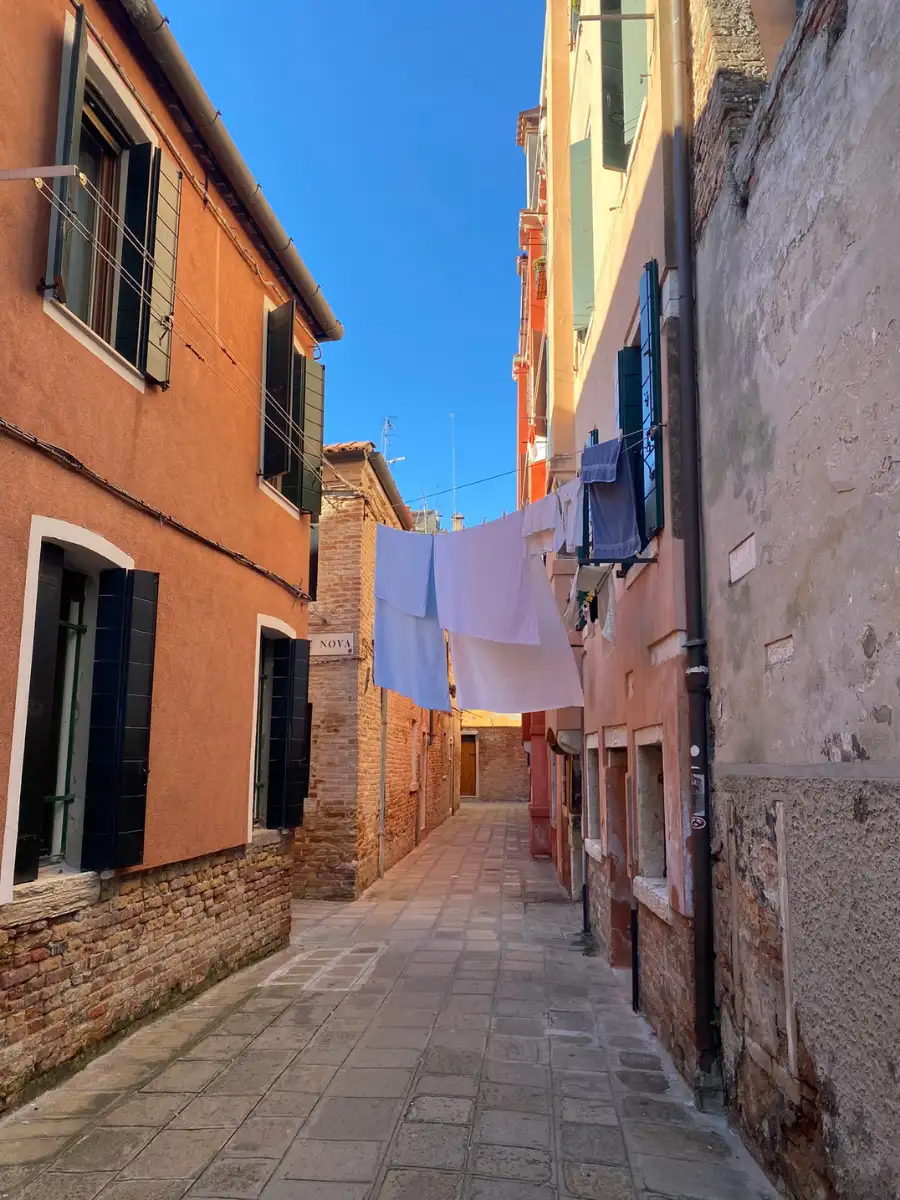
It was early morning and sunny, but cold. I walked down narrow streets, watching patches of sunlight cast a warm glow on the stone walls.
There was laundry drying in the breeze, and apart from a short but very loud burst of church bells, it was completely silent.
There wasn’t a single other person around. And in that moment, I felt like I had Venice all to myself.
So if you’d love to visit Venice but you’re put off by the crowds, then I’m here to tell you: go in January! And that surreal feeling of having one of the most famous cities in the world all to yourself can be yours.
What's the weather like in Venice in January?

Real talk – winter in Venice can be foggy, rainy or windy – sometimes all three!
It gets cold and damp, so you’ll want to bring your waterproofs, your warmest jacket and even thermals too. But if you’re wearing the right gear, January is the month when Venice can be a total dream.
Because in January you can also get lucky, with clear blue skies, bright sunshine and even little sun traps where you’ll suddenly feel too hot in your jumper.
And because this time of year is a less popular time to visit, you’ll find competitive prices for flights and hotels. And that means, if you want to wait to see what the weather is doing, and book something last minute, you can still find low prices.
Deals, deals, deals
That’s actually what happened to me.
I’d seen a seriously lush hotel in Venice, but the kind you put on your bucket list and forget about.
Then I spotted a last-minute deal for a couple of nights one January. They had a room available which in peak season can fetch £280 per night – and I bagged it for less than half!
I went straight to check the 10-day weather forecast – and when I saw it was 10 degrees and sunny, I couldn’t have booked it any quicker!
This is the good thing about January deals. Hotels that would normally be out of budget might just come in under if you choose a January stay.
Or you can bag a nicer room – say a bigger one or one with a canal view – for much cheaper than you would during the peak season.
Prices can be dramatically less – we’re talking as much as half the price!
You can also get great deals on flights at this time of year, because fewer people are travelling. My own flight out was definitely the quietest one I’ve ever taken. They even made an announcement telling us not to move seats because the plane was so empty!
Venice's treasures

If you like to do the tourist thing and see all the sights, then you’ll have a ball in Venice in the wintertime.
Fewer people means shorter queues – or none at all – so you should breeze right through your itinerary.
Places like St Mark’s Basilica get over 3 million visitors in a year! So you can imagine how busy it gets. But I walked straight in!
Just keep in mind when you’re planning your days out that winter means an early sunset – so from about 5pm the light will go and the temperature will drop.
It’s a great excuse though to head back to your hotel and relax, especially if you’ve bagged a nice room thanks to a low-season deal. Or relax with some drinks and dinner out, knowing you won’t have to jostle for a table.
Fewer people, fewer problems

Venice is such a famous place, that it can get incredibly busy, especially at popular times like carnival (February) or the boat regatta (September).
But just as there are busier times, there are quieter times – and January is one of those.
There are tourists still of course, but it’s less intense. There’s more space on the water taxis (and you can get on the first one that comes!) more tables free in restaurants, and shorter queues for attractions.
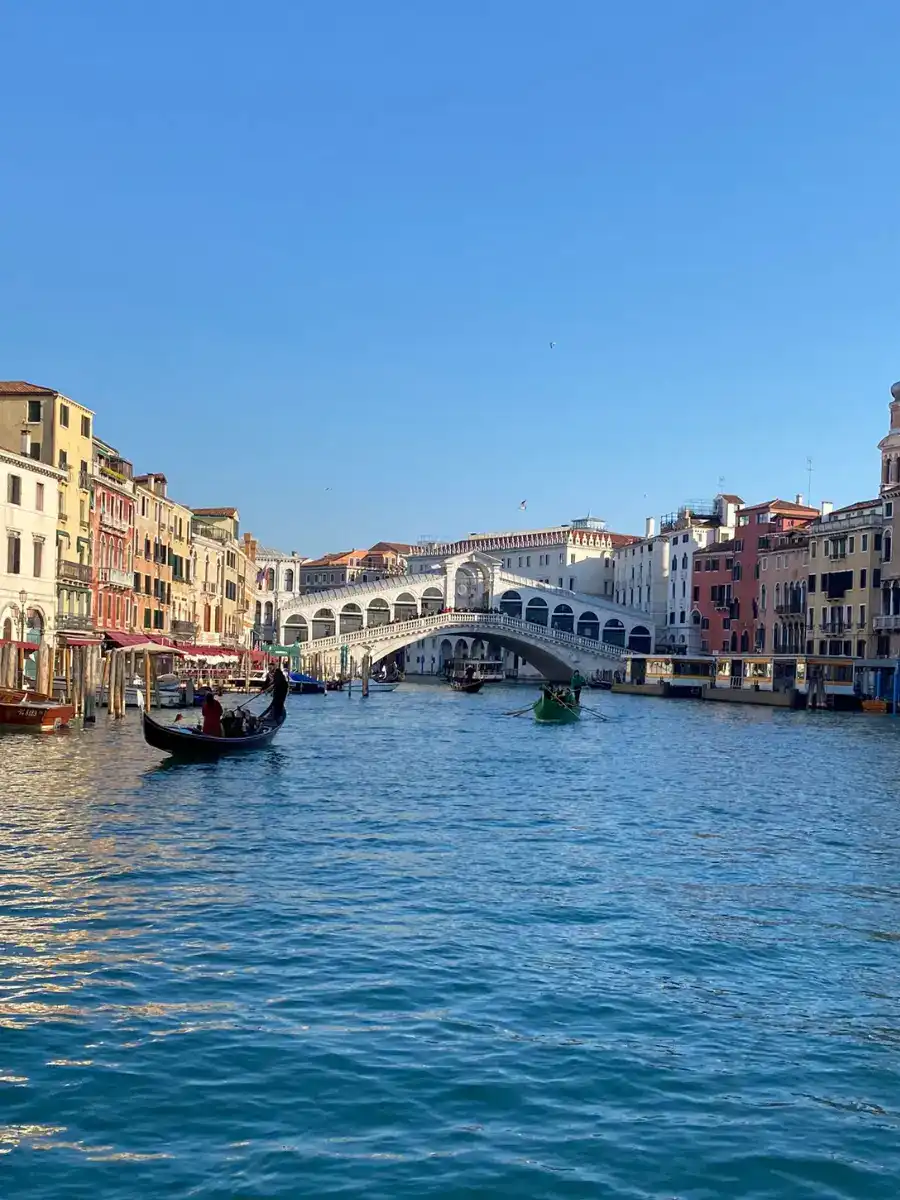
It’s also much easier to get good photos – whether that’s for the gram or your own camera roll – because places aren’t as busy. And you’re not competing with so many others for the perfect vantage point!
One morning I went up the bell tower on St Giorgio island to see the view back over Venice. There were just a handful of other people up there, so I could see the incredible views totally uninterrupted.
Plus I could really linger and enjoy the moment, moving on when I felt like it and not because I had a giant crowd behind me!

But is everything actually open?
Winter is typically a time when more restoration and repairs happen. Venice is chock-full of attractions – so there’ll definitely be plenty to see – but if you have something specific on your hit-list, look it up before you travel.
And don’t just check opening times. Sometimes a building might have repairs happening on the outside, so it could be partially covered. They often create a hoarding that looks just like the building underneath, which is pretty cool, but it can take the shine off!
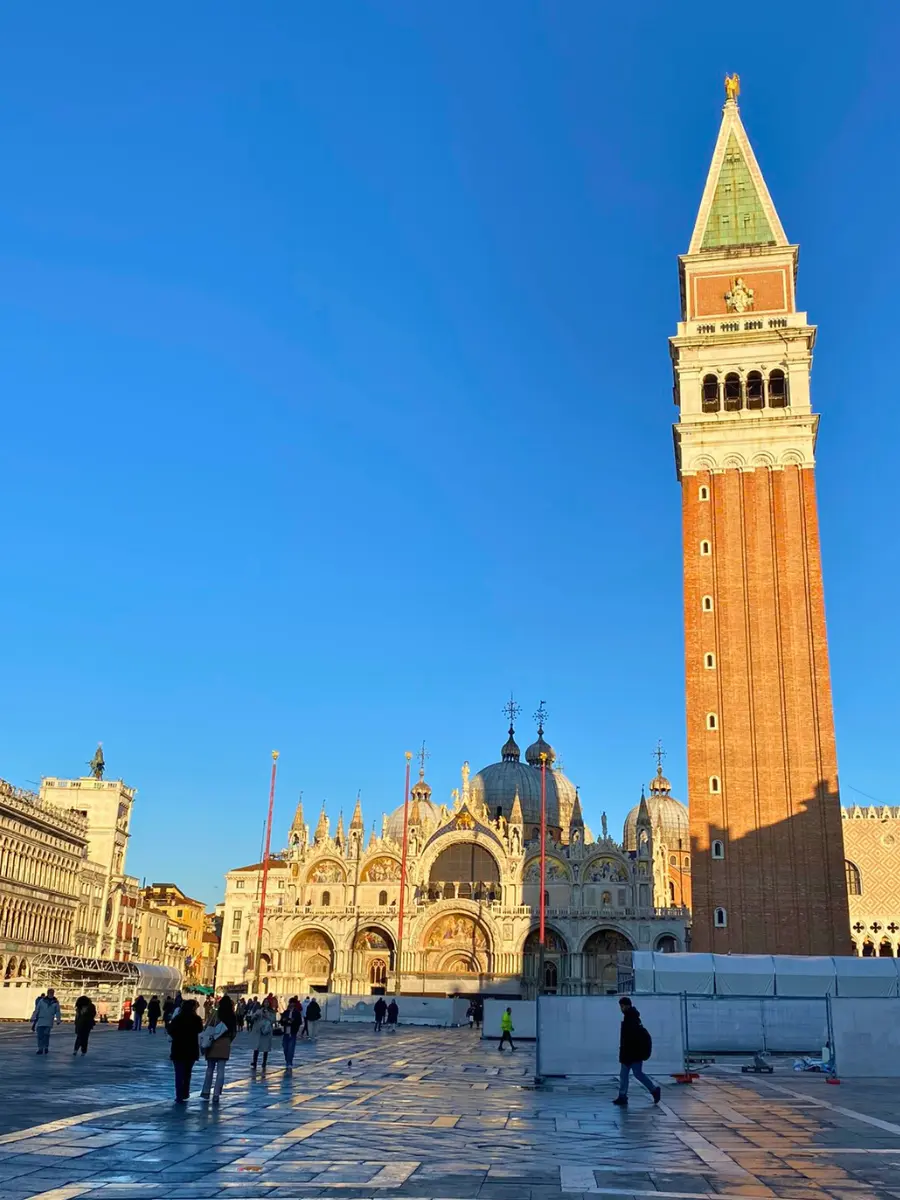
Some restaurants and bars might be shut as well – or close early – but plenty will still welcome you with open arms.
When I was in Venice in January, there was some building work going on in St Mark’s Square, and there was a church and a pizzeria I had wanted to visit that were both shut. But everything else I wanted to see was open.
Venice is great for just walking the streets and soaking up the atmosphere – and you can do that 24/7!
Where to stay

In January, you can actually find a decent amount of cheaper accommodation on Venice island, because prices can dip so low.
But as a general rule, you get lower accommodation prices year-round in Venice’s mainland city, Mestre. It isn’t as beautiful, but it’s a smart choice if you’re on a budget. And you can get the bus or train to Venice island in as little as 10-15 minutes.
If you don’t want to stay on Venice island but you don’t fancy Mestre, you could combine Venice with another Italian city and do a day trip.
Ryanair flights to Venice actually arrive in Treviso, which is an attractive city in its own right about half an hour from Venice. Or you could fly to Verona or Milan – they’re an hour and a half and 2 hours away respectively.
Right now, there’s no extra city tax payable for day vistors to Venice (one was trialled in 2025), although it’s possible that could change in future.
If your heart is set on staying on Venice island itself, look for more affordable accommodation in the quieter areas like Dorsoduro and Cannaregio.
These parts are a bit more residential and chill, compared to an area like St Mark’s which has some of the city’s biggest attractions.
Flooding (acqua alta)
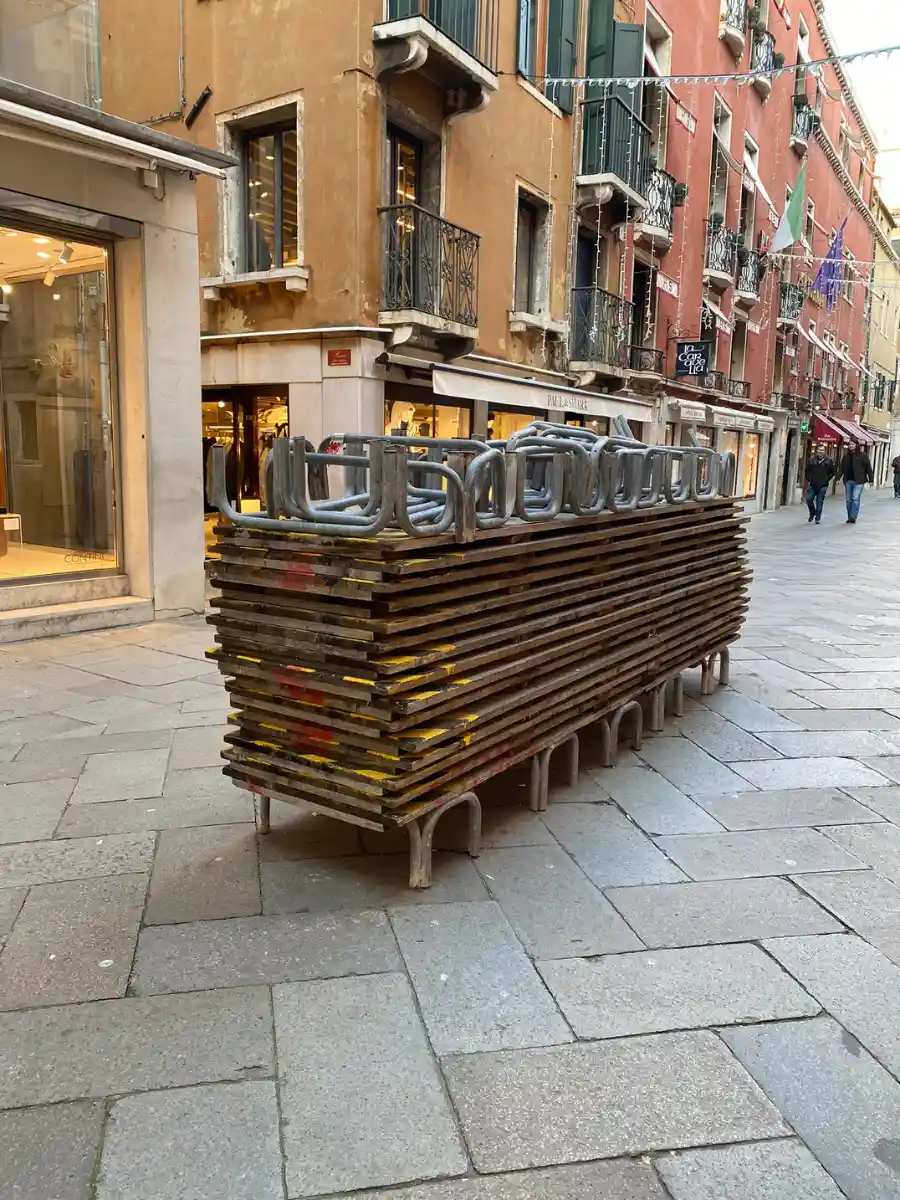
Venice can experience flooding (acqua alta), and it’s more frequent in winter and autumn. So if you’re planning a January visit, it’s good to be prepared.
The flooding isn’t actually because of rain – it’s a high tide – and at this time of year water levels can get higher than usual. This means parts of Venice can go underwater and you might find your route interrupted.
They’re super organised for it though – they set up raised walkways so you can still move around the main streets. It’s a pretty unique experience, and it shouldn’t disrupt your visit too much, especially if you’ve brought spare socks!
Because the flooding is tidal, it means the water is only high for a period of time – usually in the middle of the day. Then it subsides and you can walk around as normal – so don’t worry, you can still chase those magical backstreet moments!
Flooding doesn’t usually impact services like water taxis – only in exceptional circumstances with really high water levels would things be affected.
If you’re staying in a hotel, ask them about flooding and to let you know if it’s forecast. Otherwise you can check online. It’s an Italian site and the translations are inconsistent, but you can use the translate feature in your browser to glean the basics.
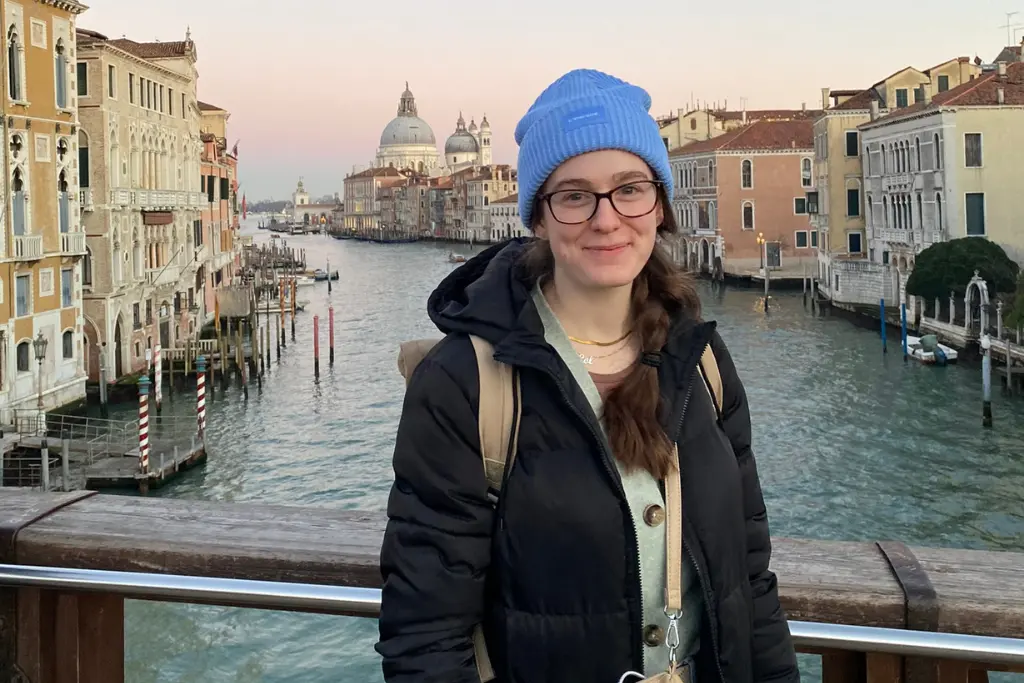
So there you have it – a trip to Venice in January is my ultimate hack for a dreamy stay!
I really love this city and I do struggle with how busy it can get. So I think January is one of the best times to go and experience the unique magic of Venice.

Check hotels on Venice island
While the cheapest accommodation is generally not on the island, because January prices get so competitive, you could bag a stay there within budget. Look at Cannaregio, Dorsoduro and Sant'Elena areas for cheaper, well-located accommodation.
Be smart with water taxis
Venice water taxis can take you to Venice's smaller islands, as well as around the main one itself. But they are expensive - a single ticket is €9.50. So if your plans involve more than a couple of boat trips, get a 24h ticket for €25 and plan all your water-based trips in that time.
Eat like a local
Venice's bar snacks - cicchetti - are simple but filling. Generally they’re hunks of bread with a topping like sardines, ham or cheese. If you chow down on a few with your pre-dinner spritz, you’ll feel fuller for longer. Don’t always expect to sit down though - lots of cicchetti bars are standing room only. Popular spots are All’Arco by the Rialto and Cantina do Spade in San Polo.
Get coffee on the go
In Italy it's common for a coffee to be much cheaper if you drink it standing at the bar, rather than sitting at a table. So sip your espresso and keep moving - you can rest your legs at lunch.
Get up early
Heading out early to beat the crowds is a classic move, but in Venice it really pays off. You can feel like you have it all to yourself! I love the backstreets of Dorsoduro and Cannaregio in the mornings - it's lovely and quiet.