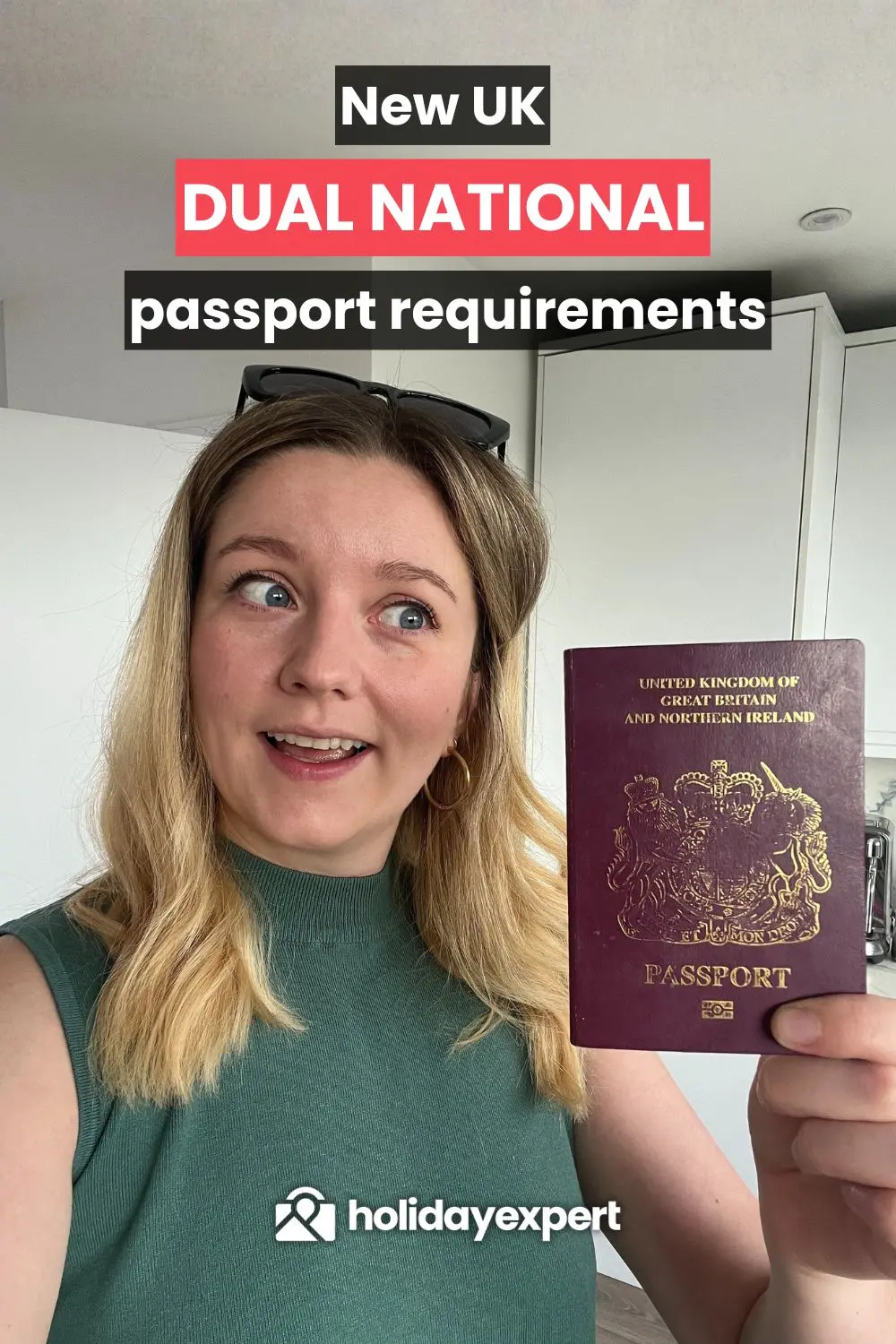
If you’re a UK dual national, a new passport rule came in in February 2026 that could affect how you travel. The good news is that it’s not complicated and it won’t apply to everyone.
In this guide, we break down who the new rule applies to, why it’s been introduced and what it means for entering the UK.

Travel Rules Are Changing for UK Dual Nationals
You might have seen in the travel news that passport requirements have changed for UK dual nationals. Here’s everything you need to know.
What is a dual national?
A dual national – also called a dual citizen – is someone who legally holds citizenship of two countries at the same time.
So, if you’re a UK dual national, you’re a citizen of the United Kingdom and also another country.
One of the most common forms of dual citizenship in the UK is British-Irish dual nationality.
I have British-Irish dual nationality 🇬🇧🇮🇪
Good news, these new changes do not apply if you have British-Irish dual nationality.
So long story short, nothing is changing for you!
I have UK dual nationality but I’m not Irish
If you’re a UK dual national and your other nationality isn’t Irish, this part does apply to you, so listen up.
Since 25 February 2026, you’ve needed to travel into the UK using a UK passport.
In the past, this was just an option but from this February date, it’s become mandatory.

Why do I need my UK passport to arrive in the UK?
This change is linked to a new UK border system called ETA, which stands for Electronic Travel Authorisation.
ETA was launched by the UK government in April 2025 for visitors from countries that don’t require a visa to enter the UK. This includes travellers from places like Europe, the US, Canada and the Caribbean.
Since April 2025, the ETA scheme has been implemented in phases, but full enforcement of the scheme began on 25 February 2026.
That’s why, from this date, you’ll need to arrive in the UK using your UK passport – it’s how border staff can see that the ETA rules don’t apply to you.
Find out more about the ETA in our guide
What if I don't have a UK passport?
As a UK dual national, you are entitled to a UK passport but until now it hasn’t been mandatory to have or use one.
However, since 25 February 2026, you will need a British or Irish passport to enter the UK.
If you don’t have one, you may not be able to board your transportation to the UK. And if you do manage to board, you could be subject to additional checks at the UK border while your nationality is confirmed.
The only exception to displaying a UK (or Irish) passport to demonstrate your nationality is a certificate of entitlement, which proves your right to live in the UK.
The Home Office has issued temporary guidance that some airlines and ferry companies may allow you to travel if you have an expired British passport (from 1989 or after) or a valid passport for one of the nationalities that requires an ETA.
If you don't have a valid UK or Irish passport or a certificate of entitlement, then you could be subject to additional checks at the border while your nationality is verified.Does this new UK passport rule apply to children?
Yes – anyone with UK dual nationality, of any age, needs to show a UK passport when arriving in the UK.
The only exception would be if their second nationality is Irish – both children and adults can enter the UK on their Irish passport.
Can I use my other passport and apply for an ETA?
No. If you are a UK dual national, you cannot apply for an ETA alongside your other passport to enter the UK.
This is because ETAs are only for foreign nationals and so even if you apply for one using your other passport, it doesn’t override your UK citizenship.
How do I apply for a UK passport if I have UK dual nationality?
You simply need to apply for a UK passport before your trip. You can apply online and find full guidance on the UK government passport website.
Don’t Get Caught Out: New Passport Rules for UK Dual Citizens
If you’re a UK dual citizen, it’s a good idea to double-check which passport you’re travelling on before your next trip. With UK ETA rules now being strictly enforced at the border, arriving without proof of British or Irish nationality could mean extra checks and delays. Make sure you travel with both your passports to avoid any unnecessary stress when entering the UK.