
Taking a sleeper train in Thailand is a fantastic way to travel hundreds of miles whilst catching some shuteye, especially if you’ve booked your own affordable first class compartment. The only problem is: they’re really difficult to book.
Earlier this year I managed to score two tickets to Surat Thani so here’s how I did it, how much I paid and whether it was worth all the effort.
First Class Sleeper Trains in Thailand: What You Need To Know
Let’s start with the basics: how trains work in Thailand, where the sleeper routes go, and what you can actually expect to pay.
What are trains like in Thailand?
Thailand has a well-used rail network that connects the capital Bangkok with much of the country, including popular routes heading north, south and towards the borders.
Trains vary quite a bit depending on the route and class you book, but they’re generally an affordable, scenic and practical way to cover long distances – especially if you’re not in a rush.
Are there sleeper trains in Thailand?
Yes, and they’re one of the best ways to cover Thailand’s longer routes. Instead of losing a whole day to travel, you can board in the evening, sleep onboard and wake up much closer to your next destination.
Where do sleeper trains go in Thailand?
Thailand’s sleeper trains run on several long-distance routes from Bangkok. Chiang Mai is one of the best-known and most popular sleeper train journeys, but it’s not the only option. You can also travel south towards Surat Thani, or north-east towards places like Nong Khai and Ubon Ratchathani.

What classes are available on Thai sleeper trains?
Most Thai sleeper trains have a mix of second class and first class options. Second class usually means a shared carriage with bunks, while first class gives you a private compartment, typically with two beds, a lockable door and a bit more space to yourself.
The catch is that first class cabins are limited, which is why they can sell out quickly – especially on the most popular routes.
How much do sleeper trains in Thailand cost?
Prices vary depending on the route, train and class you book, but Thai sleeper trains can be very affordable.
As a rough guide, for an overnight journey, second class sleepers can be around £15-£20 per person, while first class sleepers can be closer to £25-£35 per person when sharing between two. There may be the option for sole occupancy, though you can expect to pay around £40-£50.
Why are first class sleeper trains in Thailand so difficult to book?
First class availability is limited, with often only one carriage of private compartments per train. Add in the fact they can feel surprisingly affordable to tourists, and it’s not surprising that they get snapped up fast.
How To Book a First Class Sleeper Train in Thailand
Getting a first class sleeper train ticket in Thailand is not impossible, but it does take a bit of planning and patience. Availability can be limited, the best routes sell quickly and the booking process has a few quirks worth knowing about before you start.
A Step-by-Step Guide to Booking a First Class Sleeper Train in Thailand
Step 1 - Create an account
Start on the State Railway of Thailand ticket website and change the language to English. I’d recommend creating your account first, as you’ll need one to complete the booking anyway.

Is the website not working for you? This happened a few times to me too! Try opening in a different browser – I found Safari more effective than Chrome – and at other times it’s simply a case of coming back and trying to access the website again at another time.
When registering, select that you’re a foreigner and enter your name, passport number, email address and password. You’ll then need to confirm your email – mine landed in my junk folder, so check there if it doesn’t appear straight away.
Step 2 - Search for your route
Once your account is set up, search for your route and travel date, then scroll through the train options.
Step 3 - Choose your train
Find the fare that works best for you. It’s worth doing a little research first, as some routes have newer and older trains, and the newer ones may be more popular. I find The Man in Seat 61 a very helpful resource.
Step 4 - Book your train
Choose your train and select the class you want to book – you’re looking for ‘1st Class’ which tends to be the top option if available. If you find the box is greyed out, it probably means that this option is already sold out! As for paying, you can usually pay by credit or debit card, and then once it’s gone through, your booking is confirmed.
My Top Tips for Booking a First Class Sleeper Train in Thailand

Book as early as possible
Long-distance train tickets in Thailand tend to go on sale up to 180 days in advance and, because there are so few first class cabins, it really is a case of the sooner the better.
Be flexible with your route
Bangkok to Chiang Mai is one of the most popular sleeper routes, so if you simply want to experience a first class sleeper but you’re struggling to find first class availability, it’s worth looking at less obvious journeys too. I had much more luck booking Bangkok to Surat Thani, which is a great option if you’re heading towards Khanom, Koh Samui and Koh Tao.
Don’t dismiss the older trains
It can also help to look at older trains. The newer train on my route was fully booked for months on end, but I was able to get first class tickets on the older train, which left at a less convenient time but still did the job.
Travel off peak
Travelling outside the busiest periods can make a big difference. As I was travelling in early June, which is low season, I booked my tickets just 35 days before travel. But even in the off peak season, these compartments do get booked up and my train carriage was fully sold out.
Keep checking for cancellations
I joined the waitlist for the newer train and never heard anything, but I did spot one first class bed pop up on the day of travel, which suggests cancellations can happen. Not ideal if you need two beds, but worth knowing if you’re travelling solo or feeling lucky.
My Experience Travelling in a First Class Sleeper Train in Thailand
My route
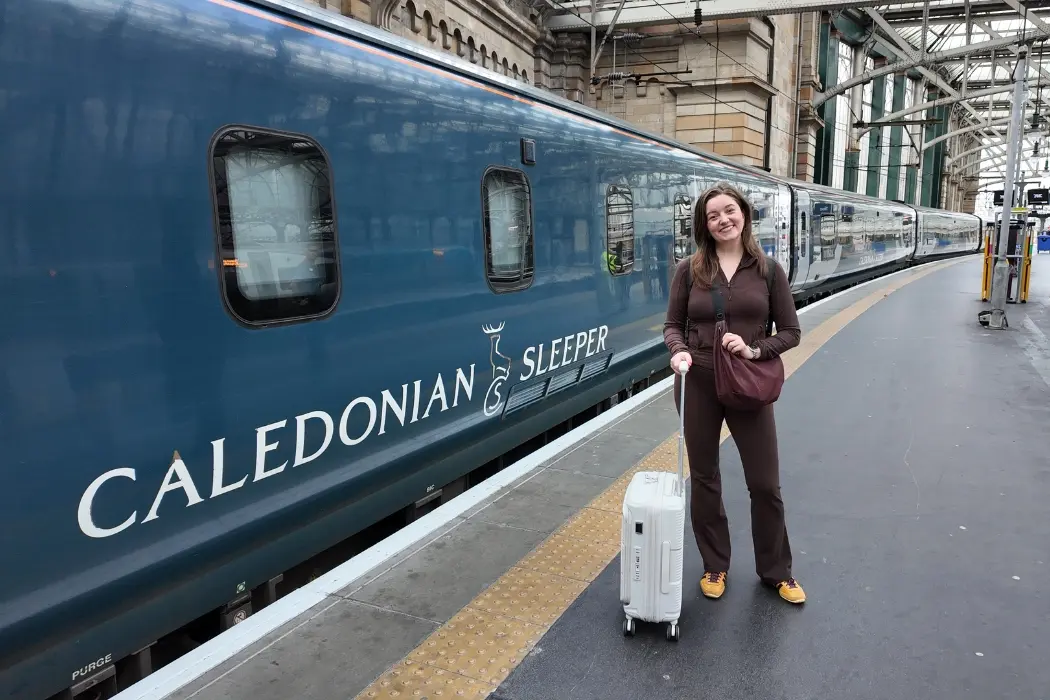
I travelled on the 83 Express train, one of Thailand’s older sleeper services, which runs from Bangkok to Trang. I was only travelling as far as Surat Thani, as we were heading on to Khanom on the east coast by car.
As we’d been in Kanchanaburi beforehand, I actually boarded at Nakhon Pathom rather than Bangkok, which was much easier for us to get to. It’s worth noting that the 85 Express train, which leaves Bangkok around an hour later, is the newer option on this route – but first class on that train gets booked up incredibly fast.
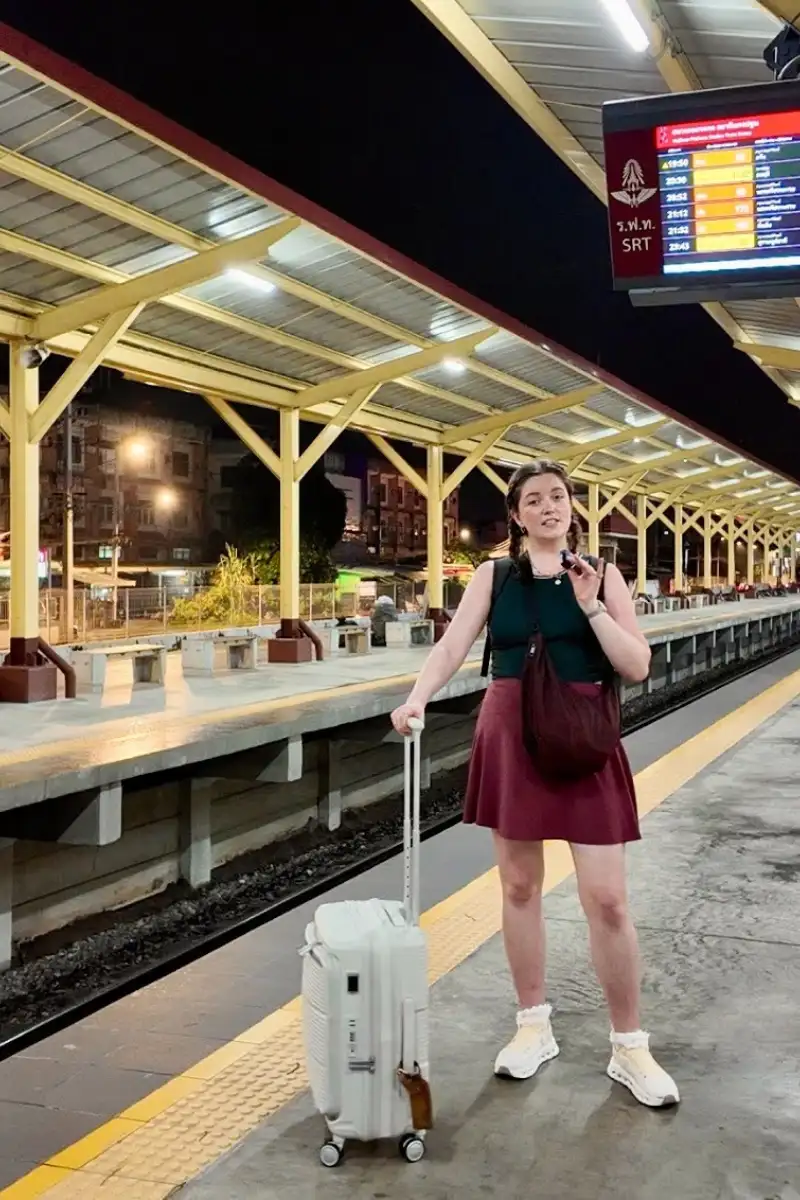
Checking in and boarding
We arrived at Nakhon Pathom station around 30 minutes before our train, but because this wasn’t where the train started, there wasn’t much need to be that early. We had printed our tickets, scanned them at the gate and then waited on the platform.
Before the train arrived, a member of station staff checked our tickets and showed us where to stand for our carriage, which was very helpful. Once the train pulled in, a member of the train crew helped us get our luggage onboard, then we were left to find our compartment, which was listed on the ticket.
The train started moving again pretty quickly, so this is not the moment to dawdle.
First impressions of the first class cabin
What was inside the first class cabin?
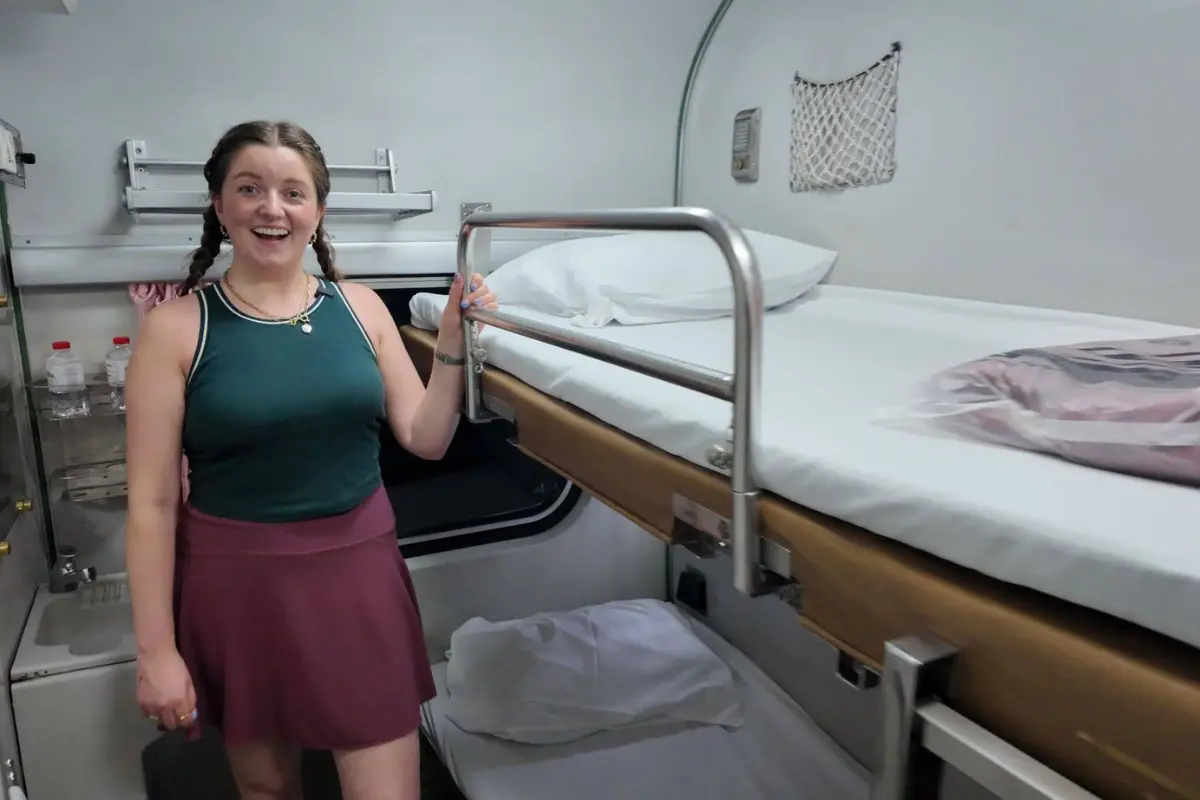
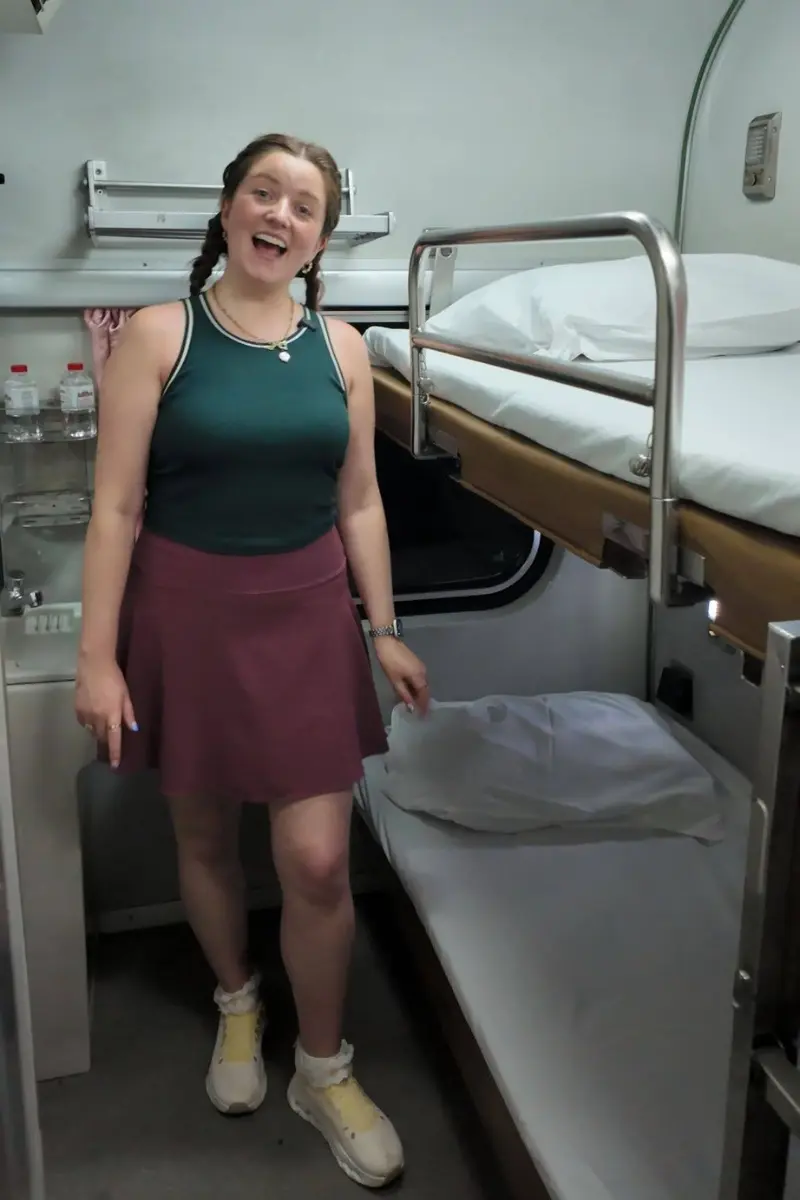
Inside our first class compartment were two bunk beds, already fully made up for sleeping with a white sheet, pillow and a blanket wrapped in plastic. There was also a sliding door, which made the cabin feel private, although the wall between us and the next compartment was quite thin – so maybe don’t plan on recording a full room tour at midnight like we did.
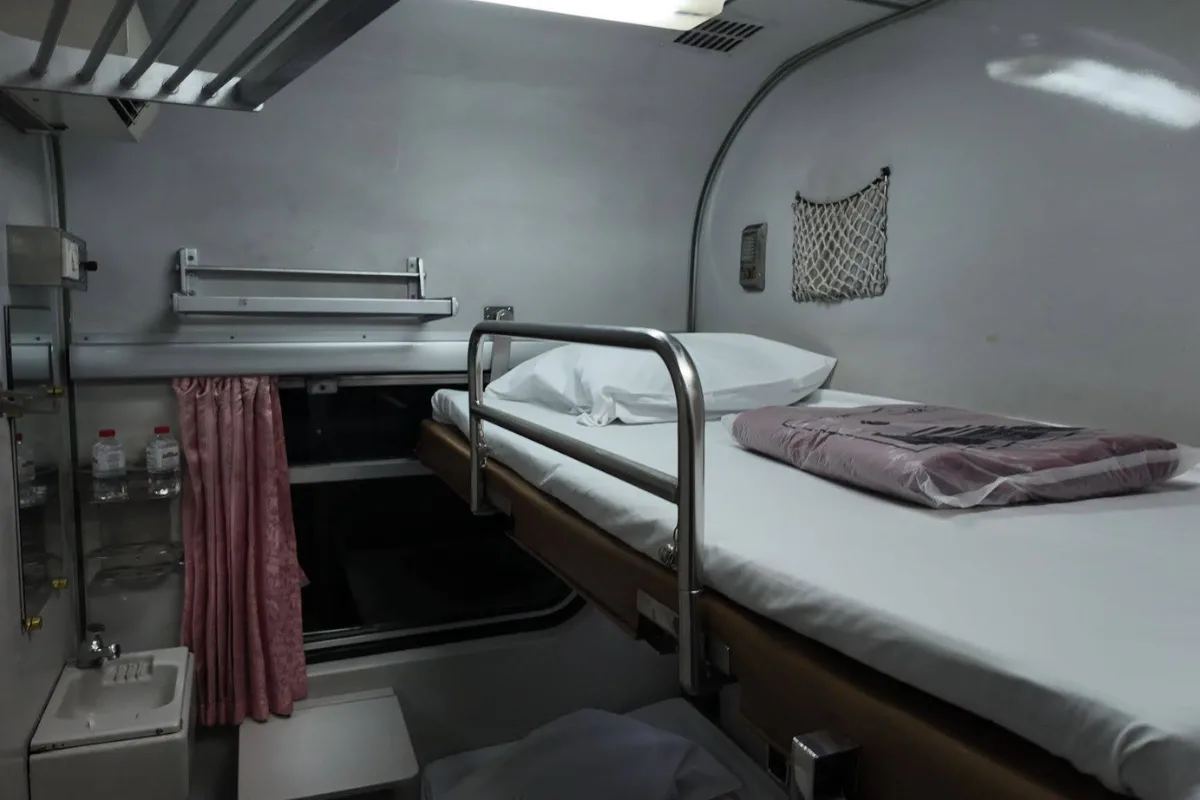
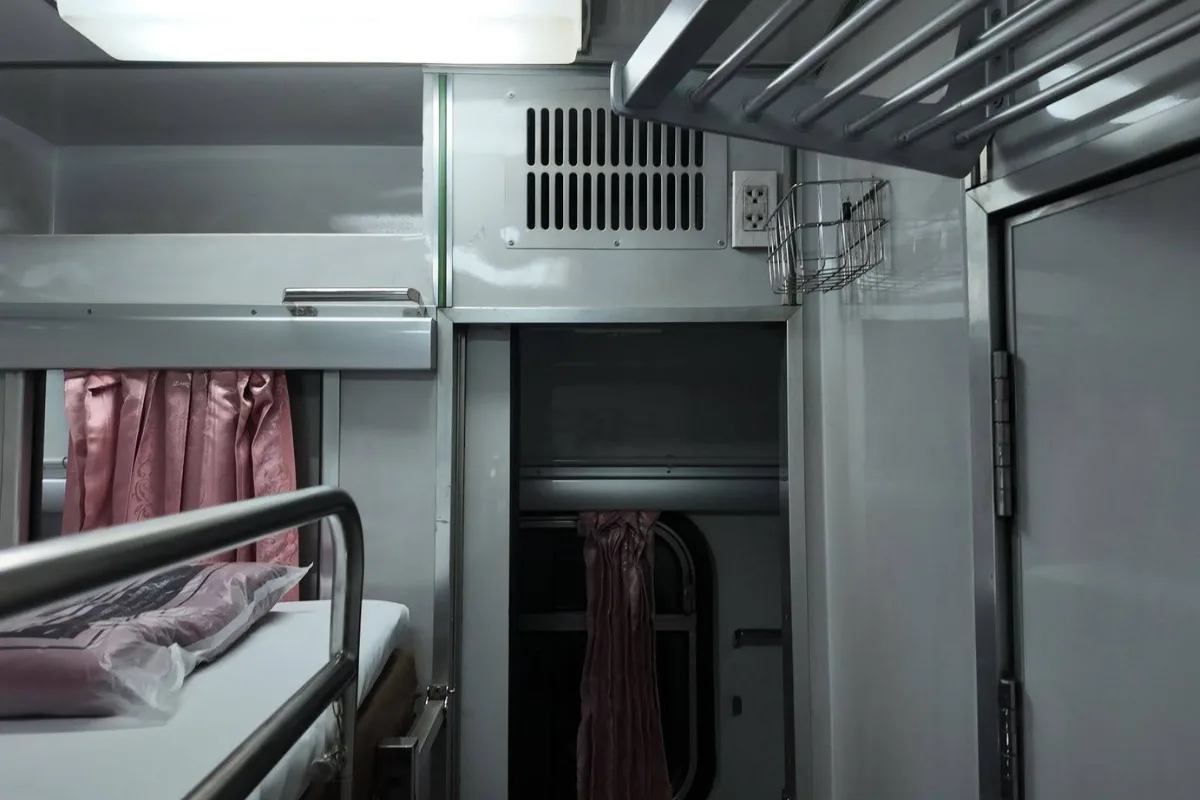
Storage-wise, there were two overhead shelves for backpacks, plus a small area above the bunk for another bag. We managed fine with two backpacks, one small suitcase and one medium suitcase, but larger suitcases would have been a struggle as they didn’t fit under the beds.
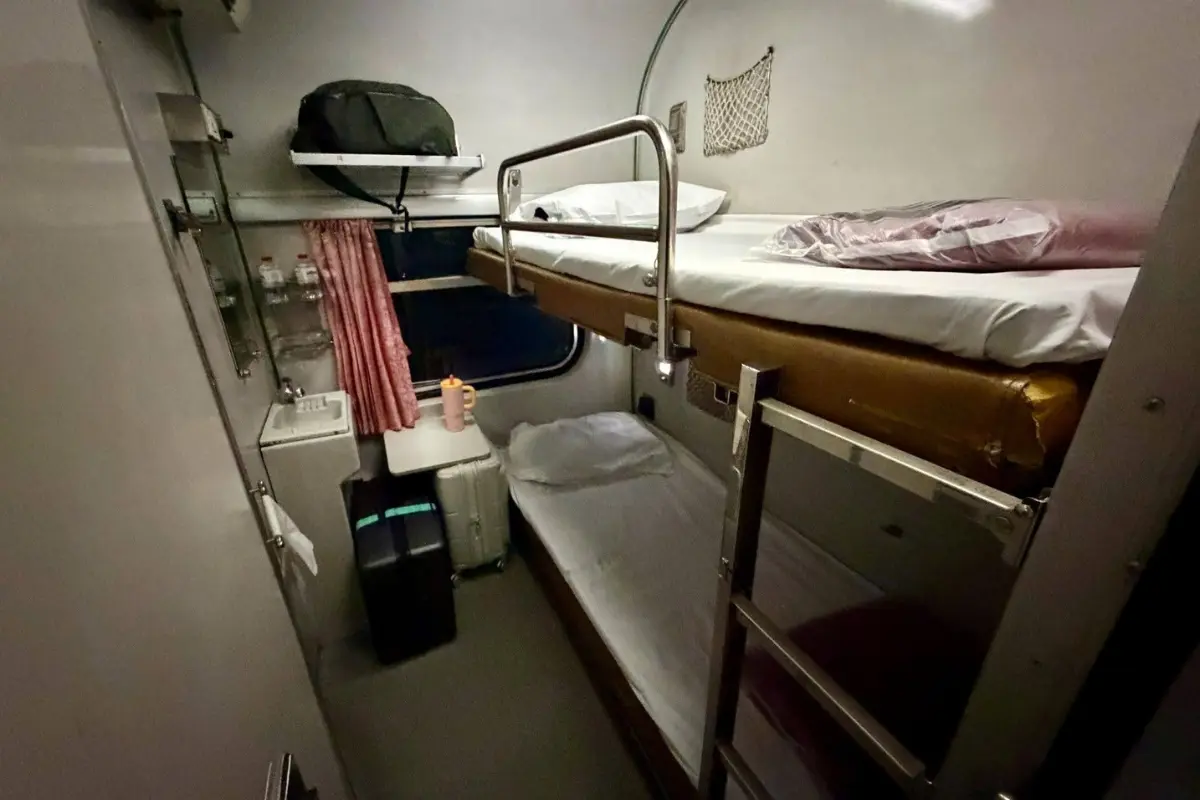
There was also a sink, toiletries, two bottles of water, individual reading lights, small nets by the beds for bits and pieces, a coat hanger, a fan and two plug sockets above the door. The air con was definitely doing its job too – if anything, the cabin was on the chilly side, which I’ll take over being too hot on an overnight train any day.
What were the bathrooms like?
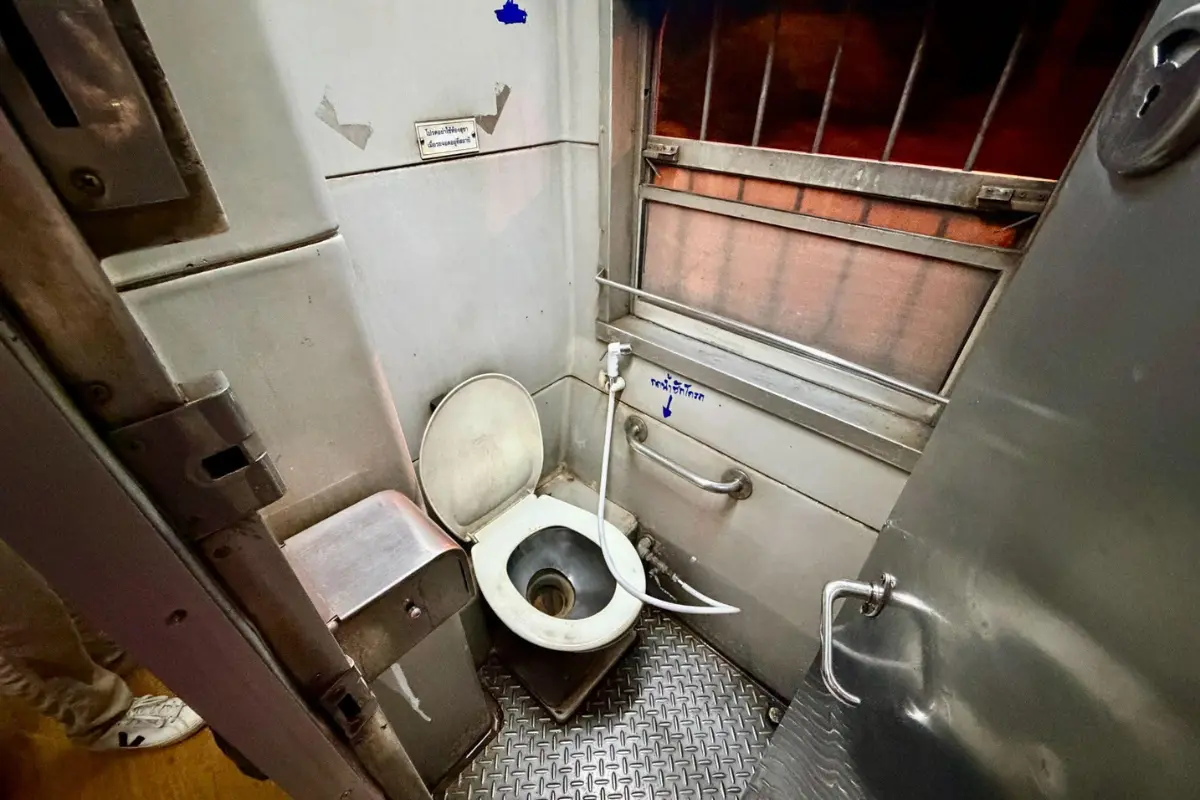
You don’t have your own private toilet, but instead share with the rest of your carriage. The first toilet I found was a squat toilet, which is essentially a hole in the ground that you squat over. However, I’ve been on enough trains to know there’s often a standard westernised toilet somewhere nearby too – and sure enough, there was one just around the corner.
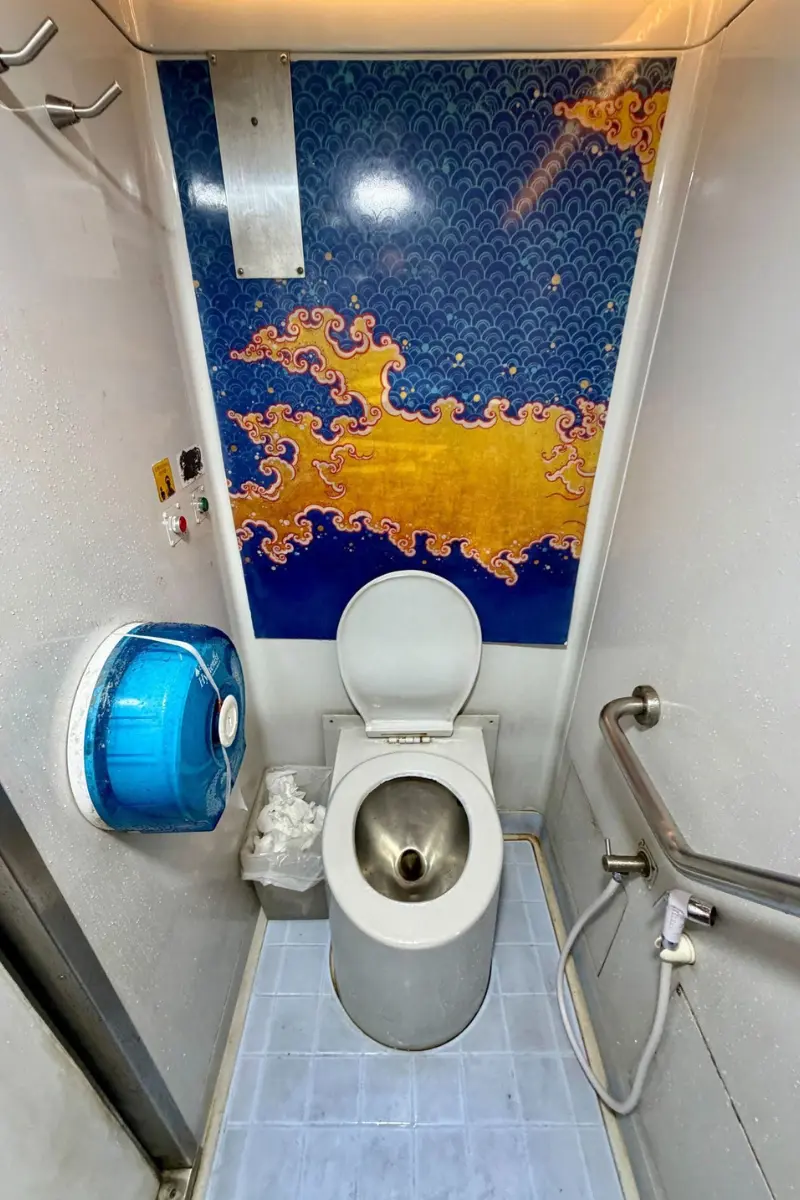
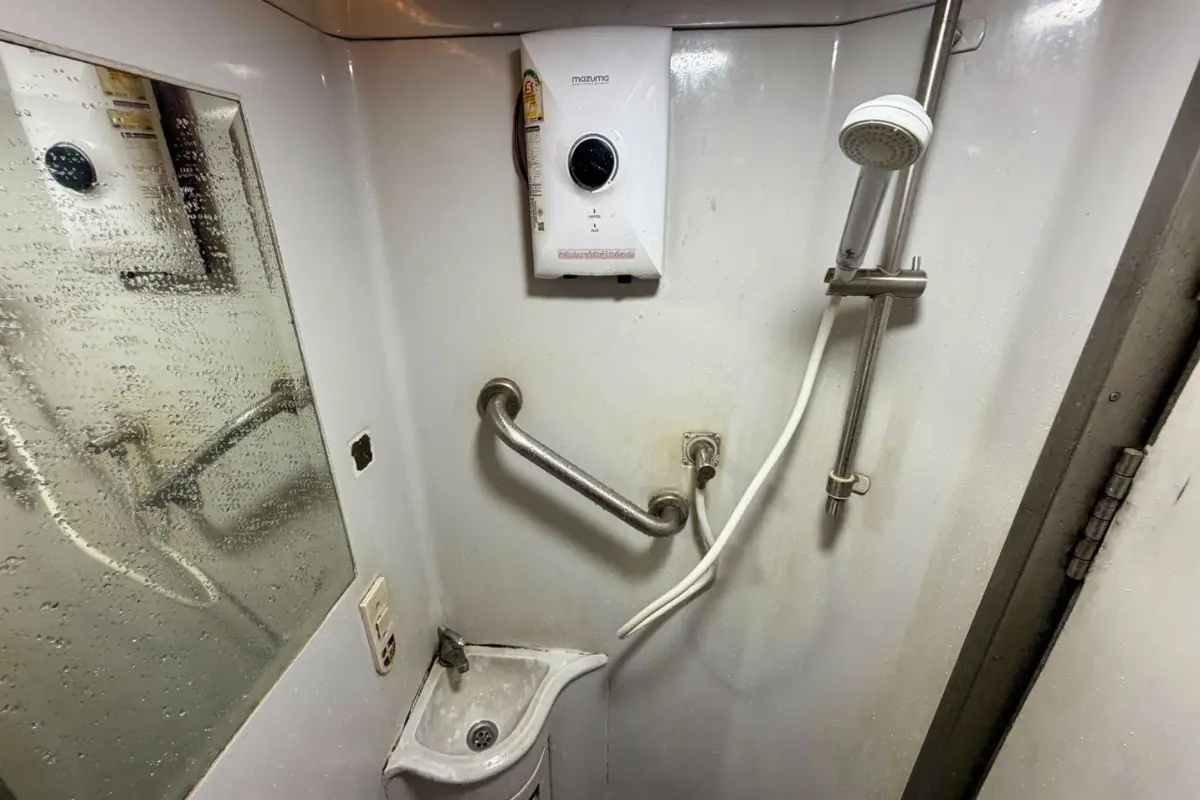
It wasn’t fancy, but it was clean, had plenty of loo roll and even had a shower, which I wasn’t expecting. We didn’t have towels with us so we didn’t use it, but it was good to know it was there.
Was there food and drink onboard?
I was excited to go and explore the food carriage, until I realised there wasn’t one! So if you’re travelling on this train, make sure you eat beforehand and bring snacks for the journey.
The newer 85 train, which runs a similar route around an hour later, does have a food carriage, so it’s worth checking the facilities on your specific train before you travel.
What was it like trying to sleep?
The beds were fairly firm, but comfortable enough, and there’s something about the gentle motion of a train that always makes me feel like I’m being rocked to sleep.
That said, don’t expect the smoothest night of your life. It can be noisy and bumpy, so I’d definitely recommend bringing earplugs. I didn’t sleep fantastically, but that was largely because I ended up going to the toilet three times in the night, so I can’t really blame the train for that.
Arriving in Surat Thani
We were due to arrive in Surat Thani at around 5am, so I set my alarm for 4:30am. There hadn’t been any announcements on the train, so I did wonder how we’d actually know when our stop was coming up.
Thankfully, the maps on our phones were really useful for tracking where we were, and James was able to find out online that our train was running about eight minutes late. We also got not one but two knocks from the conductor, who clearly knew where we were getting off and made sure we were awake around 10 minutes before arriving.
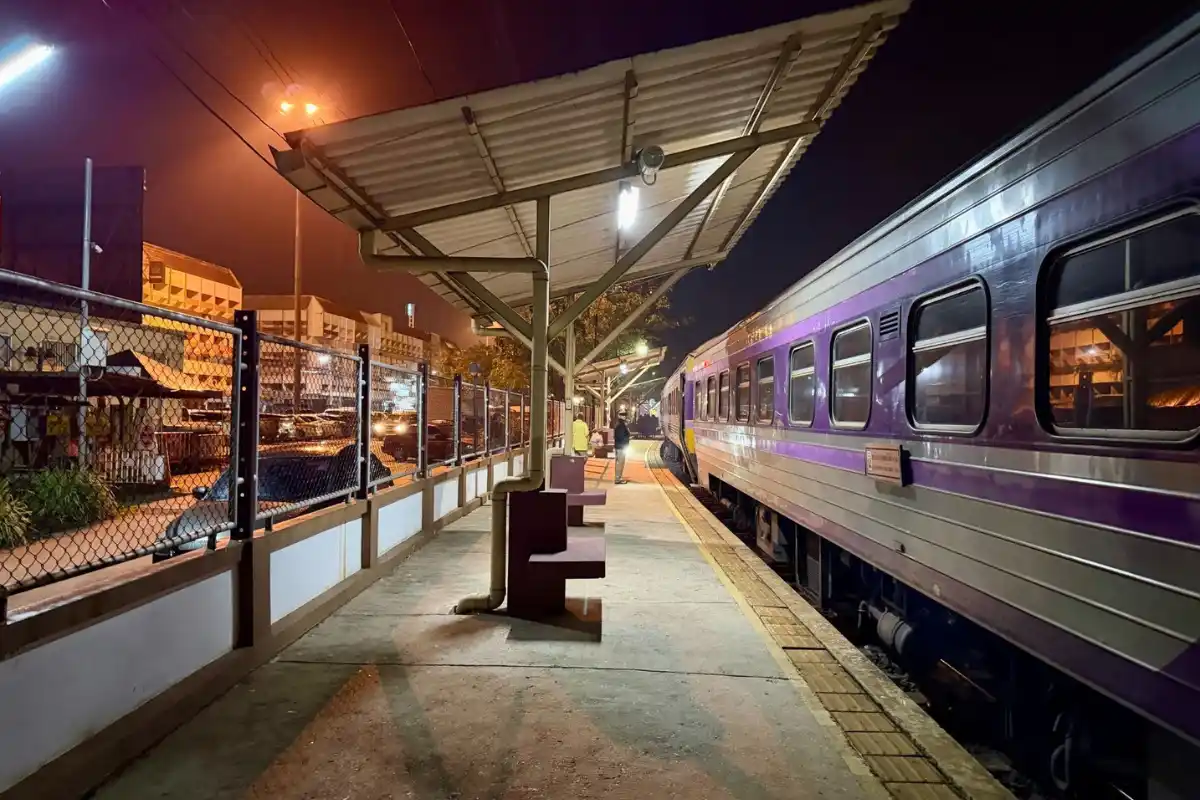
When we pulled into Surat Thani, the crew were there again to help with luggage, which was very appreciated as the train only stopped for around three minutes. And that was that – we’d made it to Surat Thani after our first class sleeper train experience.
Was second class good enough?
During the journey, I went for an explore to look at the second class sleepers. These are berths that convert into upper and lower bunks in a shared carriage, with curtains for privacy.
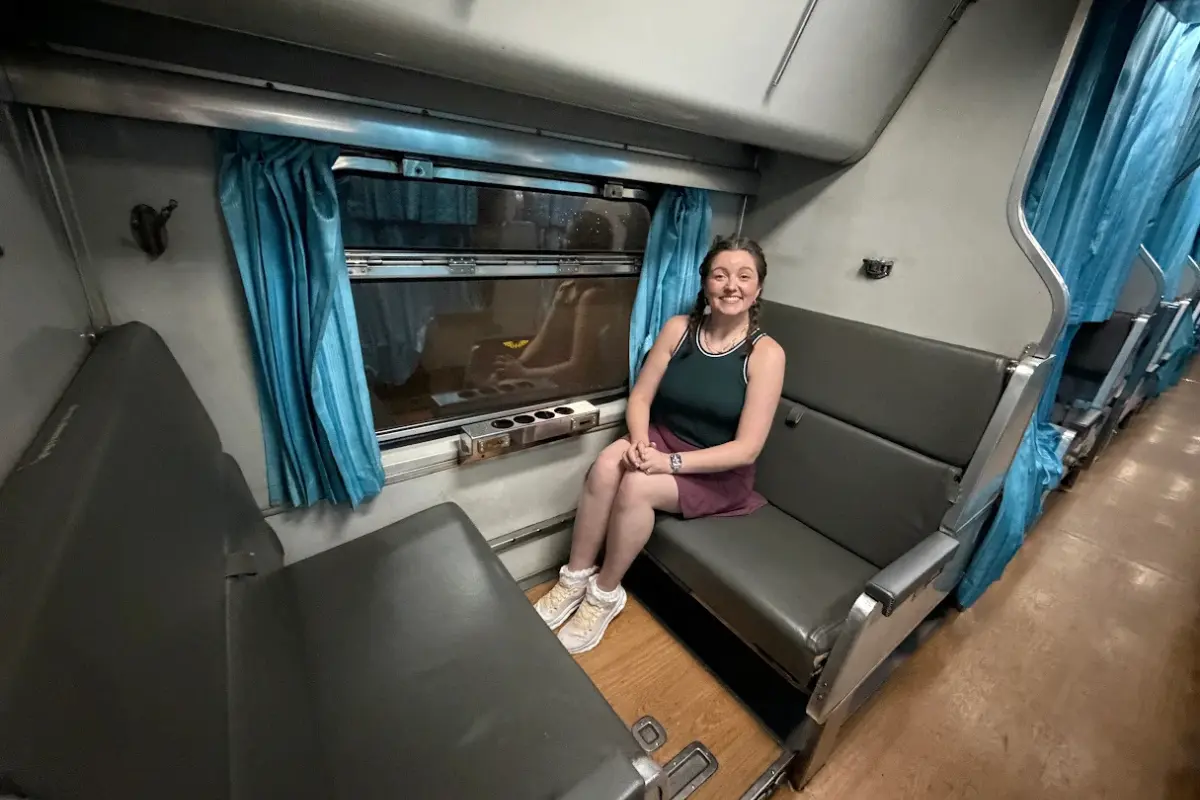
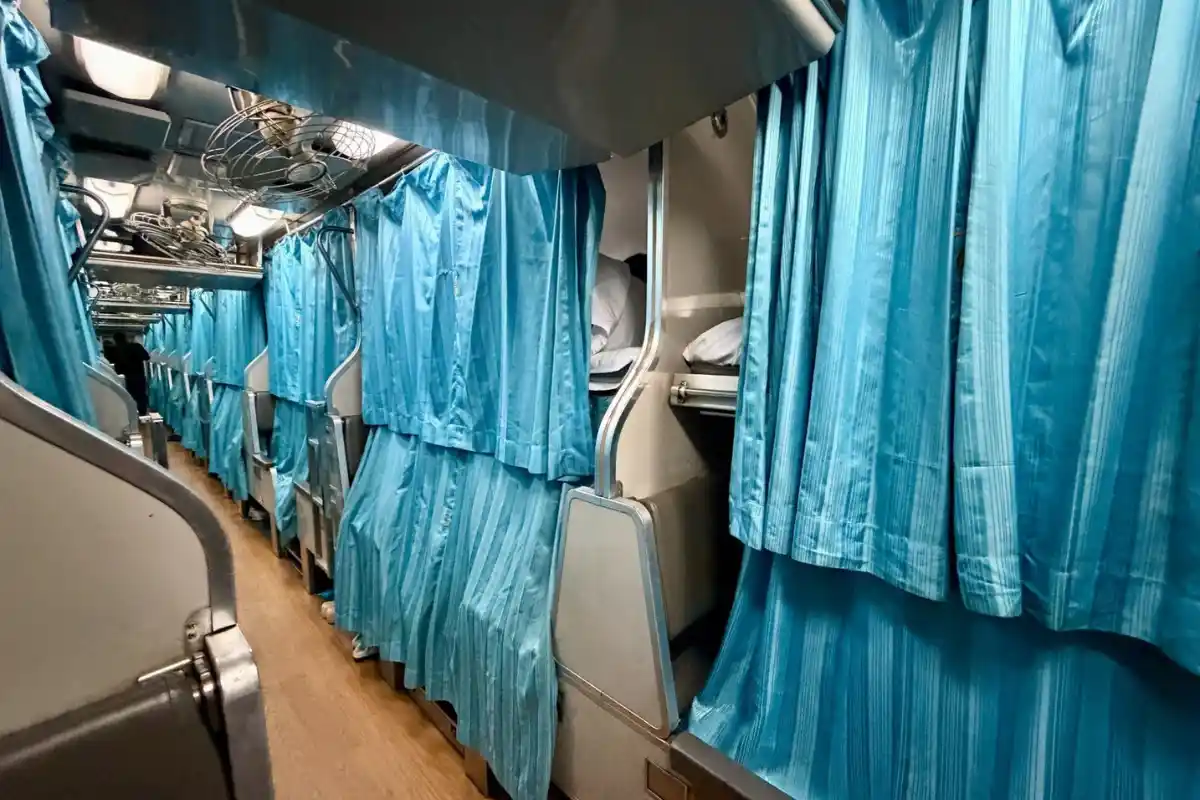
Honestly, I was quite impressed. They seemed to have the same sheets and pillows as us, and looked clean and comfortable. But the lights were still on when we walked through, and you are much more reliant on your fellow passengers being quiet.
That, and you share communal sinks and a more basic toilet.
Why first class was worth it
The biggest perk of first class was being able to close the door, switch the lights off and properly settle in. The bathrooms were also a step up from second class.
Given that second class would have cost around £17 each and first class was around £27 each, I thought the extra £10 was absolutely worth it.
Would I book it again?
Yes, definitely. If you like the idea of travelling while you sleep, it’s such an efficient way to cover a long distance, and it makes the journey feel like part of the adventure rather than just transport.
That said, next time I’d love to book the newer train if I could. Our older train absolutely did the job, but the newer one looks like a big step up for the exact same price.
Watch my experience on the first class sleeper train below
My final tip
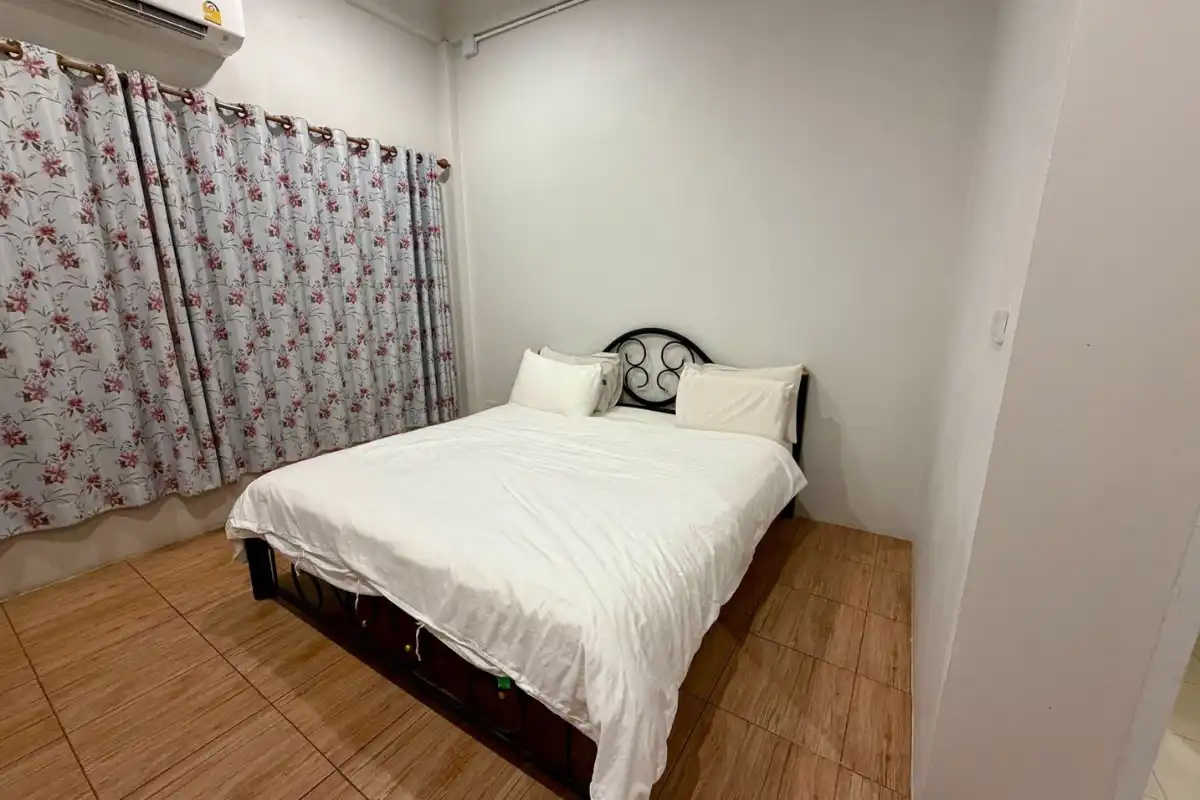
If you arrive very early, check whether there are any cheap hotel options near the station. I booked The Queen Hotel near Surat Thani station for £11, and I have never felt more grateful. It meant we got the sleeper train experience without completely ruining the next day.