New fingerprint and facial scan checks came in at borders across most of Europe in October 2025.
It’s part of the EU’s new Entry/Exit System (EES), which replaces passport stamping with a digital check-in for non-EU nationals – and that incudes the UK.
The system is still being implemented – here’s what to expect, including how it works, what you’ll need to do and whether or not it will create delays.

Coming up in this guide
How Will The New EES Work In Practice?
- Is EES information captured before or after leaving the UK?
- Airports
- Trains
- Cars and coaches
- Eurotunnel terminal at Folkestone
- Dover port ferries
What Is the Entry/Exit System (EES)?
The Entry/ Exit System, known as EES, is an automated IT system designed to record the movements of non-EU travellers, including those from the UK, when they cross external borders of the Schengen area.
It will replace the current process of manually stamping passports when entering or leaving Schengen countries.
What is the Schengen area?
Yes, before we get into this it’s probably useful to know what countries we’re talking about when we discuss this area.
The Schengen area is a group of European nations that allows free movement between them, without border controls.
This currently includes 29 European countries, most of whom are EU member states, though Iceland, Liechtenstein, Norway and Switzerland are a part of Schengen too.

As you can see, it’s most European countries and that’s why you may have seen sweeping statements about EES affecting ‘travel to Europe’.
The more true statement is ‘travel to *most* of Europe’.
What European countries aren't part of the Schengen Area?
The European countries who are not part of the Schengen area are Ireland, Cyprus and the UK. Therefore, you will not need to do EES when travelling to any of these countries.
Even before Brexit, the United Kingdom was not in the Schengen area which is why we had to go through passport checks before the gate at the airport before flying home.
Why is the EES being introduced?
The EU says the purpose of the EES is make processes at the border more efficient and to better monitor who enters and leaves the Schengen area.
Specifically it will:
- Modernise border checks and make them more efficient
- Make cross-border travel easier and quicker
- Stop travellers overstaying in the Schengen area and prevent ID fraud
- Tighten security and prevent crimes
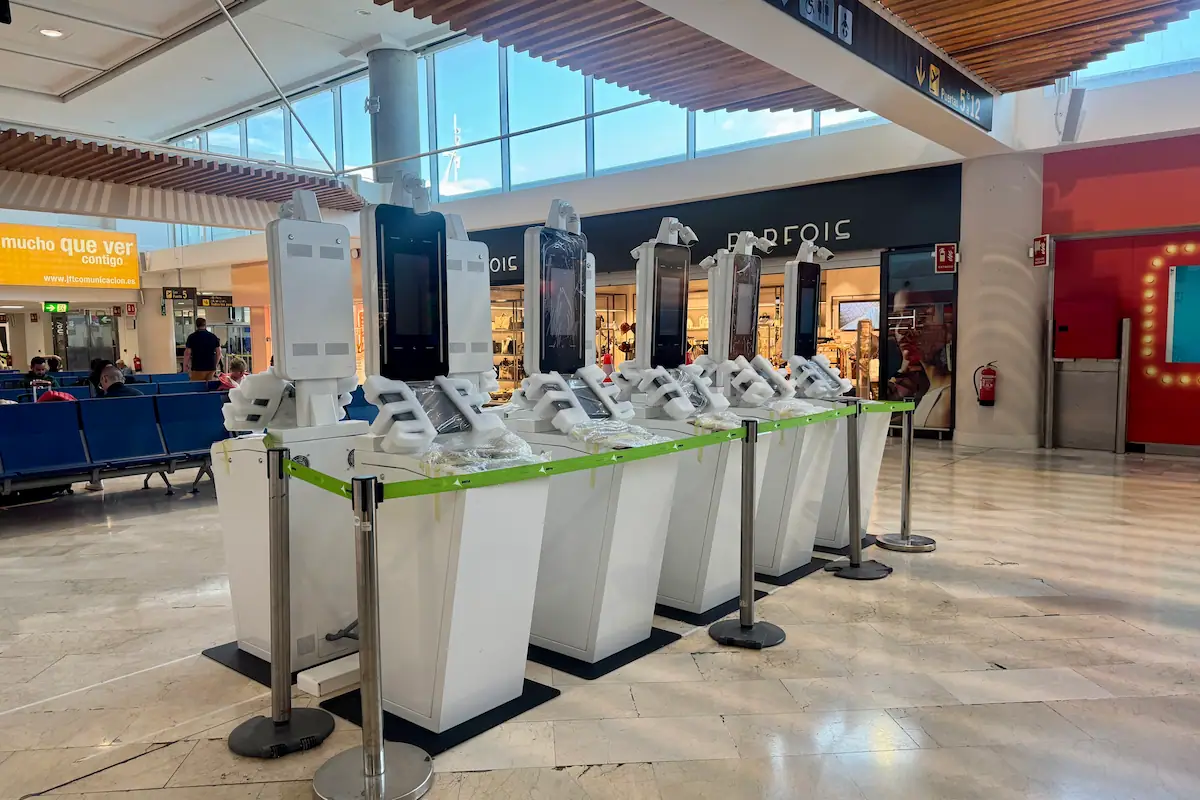
Under the new EES system, travellers must provide biometric data (fingerprints and face scans) and get their passports scanned before they cross the Schengen border, either at an automatic gate or self-service kiosk.
When will the new EES be introduced?
The EES has already launched – it happened on Sunday 12 October 2025.
We’ve been waiting a long time for it, as it was originally due to launch in 2021!
The date of 12 October 2025 was the start of what was intended to be a 6 month introduction period, with EES becoming fully operational from 10 April 2026.
Are there delays with the launch of EES?
Even though the EU has communicated that 10 April is the official deadline for the scheme to be fully operational, it’s not going to be the reality across all transport options.
Officially 10 April deadline still stands and the official EU website says all visitors to the Schengen area must provide biometric data on entry from this date.
However, car passengers using Le Shuttle and cross channel ferries, and Eurostar passengers, will not face biometric face ID checks yet, as the technology isn’t fully implemented.
What information does the EES capture?
- The system registers:
- the traveller’s name
- type of travel document
- biometric data – i.e. fingerprints (not required for under 12s) and a facial image
- the date and place of entry and exit to and from the Schengen Area
You may also be asked some or all of these questions:
- Do you have proof of accommodation (first night only)?
- Do you have a return ticket?
- Do you have sufficient funds to cover your stay?
- Do you have medical insurance?
How will the EES information be captured?
The EU is operating self-service kiosks as well as manual checks where a person takes your data.
To register in the EES, you’ll have a face scan and the four fingers of your right hand will get fingerprinted.
Self-service kiosks
If you use a self-service kiosk, you will scan your passport and submit your data yourself. You may also need to answer some questions which will be displayed to you on the screen.
Manual capture
Alternatively, you could see a person who will oversee the capture of your biometric data and may ask you some questions.
The EES rollout timeline
The rollout is happening in phases so that border authorities can manage the whole process properly.
Here’s the timeline as planned:
12 October 2025
The EES system launches across at around 10% of Schengen border crossings. Travellers are being registered in the system, but giving biometric data (fingerprints and face scans) isn’t yet mandatory. Passports are still being stamped during this time.
December 2025
It will become mandatory for any Schengen border using EES to start collecting biometric data.
January 2026
At least half of all Schengen border posts should be using EES to collect biometrics. Passport stamping will still continue for now.
10 April 2026
The EES should be fully rolled out and operational at all Schengen entry points. Once it’s fully operational, passport stamping will end for non-EU travellers entering or leaving the Schengen Area.
Will I have to do EES and get my passport stamped for now?
Yes – at least for a while. Passport stamping will continue during the EES roll out phase.
During this transition period, you might find that you need to give biometric data and still get your passport stamped, which could make border crossings take a bit longer.
The EU will share more details as the rollout continues, and we’ll keep this page updated when new information is released.
Will I need to be fingerprinted for domestic travel in the UK?
No. If you’re travelling within the UK – between England, Scotland, Wales or Northern Ireland – you’re not crossing into the EU or Schengen Area, so you won’t need to provide biometric data or fingerprints.
How Will The New EES Work In Practice?
Exactly how the EES works will depend on how you’re travelling.
For some transport types, you’ll go through the checks before you leave the UK, while for others it’ll happen when you arrive at your destination in Europe.

Is EES information captured before or after leaving the UK?
The EES will take your data when you pass through an EU airport or at the UK’s major Channel crossing points – Dover’s Ferry Port, Eurostar’s London St Pancras and Eurotunnel Le Shuttle’s Folkestone site.
So if you are flying from the UK, you won’t notice anything different at this end – your data will be captured when you arrive at your destination airport.
If you’re catching a train or a ferry, your data will be taken in the UK, before you depart.
Airports
At airports, the process is designed to be straightforward and is only meant to take a couple of minutes.
Here’s what should happen:
- You’ll arrive at your UK airport as normal, go through security and board your flight as usual.
- When you arrive at a Schengen airport, you will need to provide your biometric data – fingerprints and a facial scan – either at a self-service kiosk or with a border officer. You might also be asked some questions about the details of your stay.
- You’ll also have your passport checked – either at an e-gate or by a border officer.
- While the rollout period is underway, you will still need to get your passport manually stamped as well.
The whole process is expected to take around 90 seconds to two minutes per person once the system is running smoothly.
However we’re already hearing of reports of significant wait times at airports like Prague and Lisbon.

Trains
Facial ID checks for train passengers are on pause right now.
London St Pancras
Implementing EES at London St Pancras will bring some changes for Eurostar passengers, as checks for non-EU nationals will happen in the UK before you board your train.
They 49 self service kiosks around the station, though these will not all be open initially.
- Arrive at the station as normal and head to a self-service kiosk, currently located opposite the Eurostar security area.
- At the kiosk, you’ll scan your passport, take a facial photo, and give fingerprints (not required for under-12s).
- You might also be asked some questions about the details of your stay, although these have apparently been scrapped for now, to help speed things up.
- Then continue through the usual steps: ticket gates, security, UK exit checks, and finally French border control.
- On your first trip, a French border officer (Police aux Frontières) will finalise your EES registration at their booth by confirming your details.
For future trips, once registered, you’ll normally be able to use e-gates where available.
If kiosks are busy or not working, you’ll be directed to manual processing, where an officer will complete the checks for you.
The process should take around 90 seconds to two minutes per person, similar to what’s expected at airports.

Cars and coaches
Facial ID checks for car passengers are on pause right now. Checks for coach passengers and ferry foot passengers are in place.
Dover port ferries
At Dover, EES checks will happen before boarding the ferry, as French border controls take place in the UK. The port is adding new processing zones and self-service kiosks to manage the flow of vehicles and passengers.
Coaches
- Coaches will be directed to a holding area in the western docks.
- Passengers will disembark and use self-service kiosks to register their biometric data before reboarding. They aren’t currently asking any questions about the details of your stay – and won’t be until April 2026 at the earliest.
- Once everyone is registered, the coach will be sealed and continue to the ferry terminal without further checks.
Cars and other vehicles
- Cars will also be directed to the western docks.
- Travellers will leave their vehicles to use the kiosks and record their biometric data. They aren’t currently asking any questions about the details of your stay – and won’t be until April 2026 at the earliest.
- After that, they’ll drive to the eastern docks for the usual passport checks before boarding.
The EES registration is expected to add a couple of minutes per person to the process.
Work is underway to redevelop an old cargo dock into a new area for processing and holding vehicles. Until that’s finished, space will be limited and there may be additional delays, with temporary holding areas planned to help manage traffic.
Eurotunnel LeShuttle terminal at Folkestone
Facial ID checks for car passengers are on pause right now. Checks for coach passengers are in place.
At the Eurotunnel LeShuttle terminal in Folkestone, new EES facilities are being added to make space for 106 kiosks and 53 parking zones where passengers will complete their checks before boarding.
These checks will happen before you board the ferry, as French border controls take place in the UK.
- When you arrive at the terminal, you’ll drive straight to the designated EES check-in area.
- When it’s your turn, passengers will exit their vehicle and use an EES kiosk to scan their passport, take a facial photo, and give fingerprints (not required for under-12s). Questions about your stay have also been dropped here to keep delays as low as possible.
- Once you’ve finished the EES process, you’ll move on to the usual UK border control, where officials verify your documents.
- Next, you’ll go through French border control, where French officers complete final checks before allowing vehicles to board the Eurotunnel train.
- On arrival in Calais, there are no further border checks, as everything has already been completed in Folkestone.
The new EES step is expected to add around six minutes per vehicle to the processing time.
Other Important Things to Bear In Mind

Your first journey through the EES will take the longest
Your first time crossing a Schengen Area external border after EES launches will take a bit longer than usual.
That’s because you’ll need to register your details in the system – including fingerprints and a facial scan. This registration only needs to be done once and your record will stay valid for three years.
For future trips within that three-year window, your details will already be stored. But you will need to provide biometric data every time you visit, to confirm your identity.
We’ll see how this ends up happening in practice though, as the EES roll out happens, and we’ll update you here if anything changes.
When you'll need to re-register
If you don’t travel to the Schengen Area for three years, your EES record will expire. When that happens, you’ll need to go through the full registration process again the next time you travel.
That means scanning your passport, taking a new facial photo, and providing fingerprints (not required for under-12s). After that, your new record will be valid for another three years.
If you get a new passport
If you get a new passport, the EU says they will update their system with the new document details, so you won’t have to re-register just because you’ve got a new passport.
An app for the future
There is an app being developed to help keep things moving at the border.
The Travel to Europe app is designed to let travellers scan their passports and upload a selfie at home, to speed up queues at border control. However it’s going to be ready until 2026.
Will The New EES Create Delays?
In the long run, the EU says the EES should should make border crossings more efficient, as automated systems will replace manual passport stamping and speed up future checks.
However, during the rollout, it’s likely to cause some short-term delays – especially while travellers register their fingerprints and facial photos for the first time.
We’ve seen this throughout the process, from the initial weeks after launch right up until the official implementation date. But hopefully as time passes and things get a lot slicker, wait-times will get much shorter.
Once the system is fully up and running, the actual EES check is expected to take less than two minutes per person, but even a few extra seconds per traveller can add up when queues are long or multiple vehicles are being processed at once.
Are delays likely during the rollout period?
There have been delays during the rollout period, since travellers are supplying this information for the first time.
Until the system is fully stable, passport stamping will continue too, meaning you’ll spend time getting both your biometric data and your passport stamped.
All of this will slow things down. We have seen significant delays reported at some airports during the rollout, and are yet to see how these will pan out over the next few months.
The good news is that the delays should ultimately be temporary. Once the EES is running smoothly, processing times are expected to drop significantly.
Will the delays be worse at Dover, Folkestone and St Pancras?
There has been particular concern about delays at UK-based French border controls, where checks are carried out by French frontier police before departure.
This setup is used at Dover ferry port, Eurotunnel LeShuttle Folkestone, and London St Pancras.
It allows you to arrive in France without needing to go through border checks on arrival – but it also means any slowdown here can quickly create big queues in the UK.
Adding the new EES kiosks to this process could stretch what usually takes 45 to 90 seconds per person to a couple of minutes or more, especially during the early rollout phase.
The technology and infrastructure are still being tested, and things aren’t fully operational yet, so it’s best to allow extra time for your journey.
These locations have already scrapped the questions about travellers’ stays (like if you have a return ticket or medical insurance) to reduce delays in the initial rollout period, which should help a bit with wait times.
And currently, they are not operating facial ID checks for train and car passengers, although checks for coach passengers and ferry foot passengers are in place.
What happens if I don't want to give my fingerprints?
The collection of your biometric data and fingerprints is mandatory. If you refuse, you’ll be denied entry.
So does this mean we'll soon need a visa to travel to Europe?
Not a visa, but once the EES is up and running, the EU plans to roll out a new visa-waiver system for non-EU citizens – including travellers from the UK – visiting the EU and Schengen area.
It’s called the European Travel Information and Authorisation System (ETIAS) and is expected to launch in the final quarter of 2026.
You’ll be able to apply quickly online and it will cost €20 and last 3 years.
We’ve written a full guide about this here.
Keep Up to Date With the New Fingerprint Checks and EES
Stay informed on exactly what’s happening with the EES roll out – we will update this page with any new developments, so that you have the latest information about the EES and fingerprint and facial checks.